
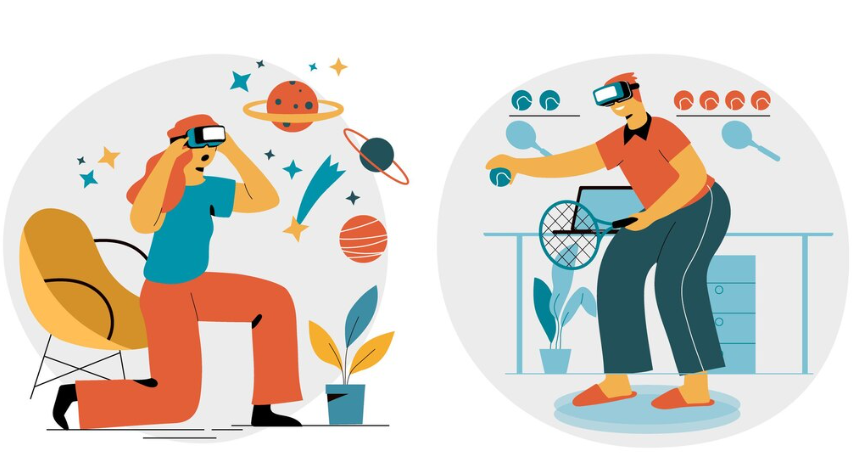
In recent years, mixed reality (MR) has emerged as a transformative technology, blending the best of both augmented reality (AR) and virtual reality (VR). This innovative approach allows users to interact with digital elements superimposed onto the real world, creating immersive experiences that were previously thought impossible.
What is Mixed Reality?
Mixed reality involves the integration of real and virtual worlds to produce new environments where physical and digital objects coexist and interact in real-time. Unlike AR, which overlays digital images on the real world, or VR, which completely immerses users in a virtual environment, MR combines the two, allowing for a seamless interaction between both realms.
Applications of Mixed Reality
1. Gaming
The gaming industry is one of the most prominent fields where MR is making significant strides. Games like Pokémon GO have already introduced players to the concept of AR, while upcoming MR games promise even more interactive and engaging experiences.
2. Education and Training
MR is revolutionizing education by providing interactive learning environments. For example, medical students can practice surgical procedures in a mixed reality setting, allowing for hands-on experiences without real-world consequences.
3. Architecture and Design
Architects and designers are utilizing MR to visualize projects in real-time. Clients can walk through a virtual space superimposed onto the physical site, enabling better decision-making and alterations before construction begins.
4. Healthcare
In healthcare, MR is being used for surgery simulations and patient treatment plans, allowing healthcare professionals to visualize complex anatomical structures and enhance their clinical skills.
The Future of Mixed Reality
As technology advances, the potential for mixed reality continues to grow. With developments in hardware and software, such as lightweight headsets and more robust platforms, MR could soon be a staple in everyday life. Companies are investing heavily in MR technology, indicating that we are just scratching the surface of what is possible.
Conclusion
Mixed reality is not just a concept of the future; it is rapidly becoming a reality across various industries. By merging the digital and physical worlds, MR opens up new avenues for innovation, creativity, and interaction. As we continue to explore its capabilities, it’s clear that mixed reality is poised to change how we engage with technology in our daily lives.
Please note: This content has been generated by artificial intelligence.